
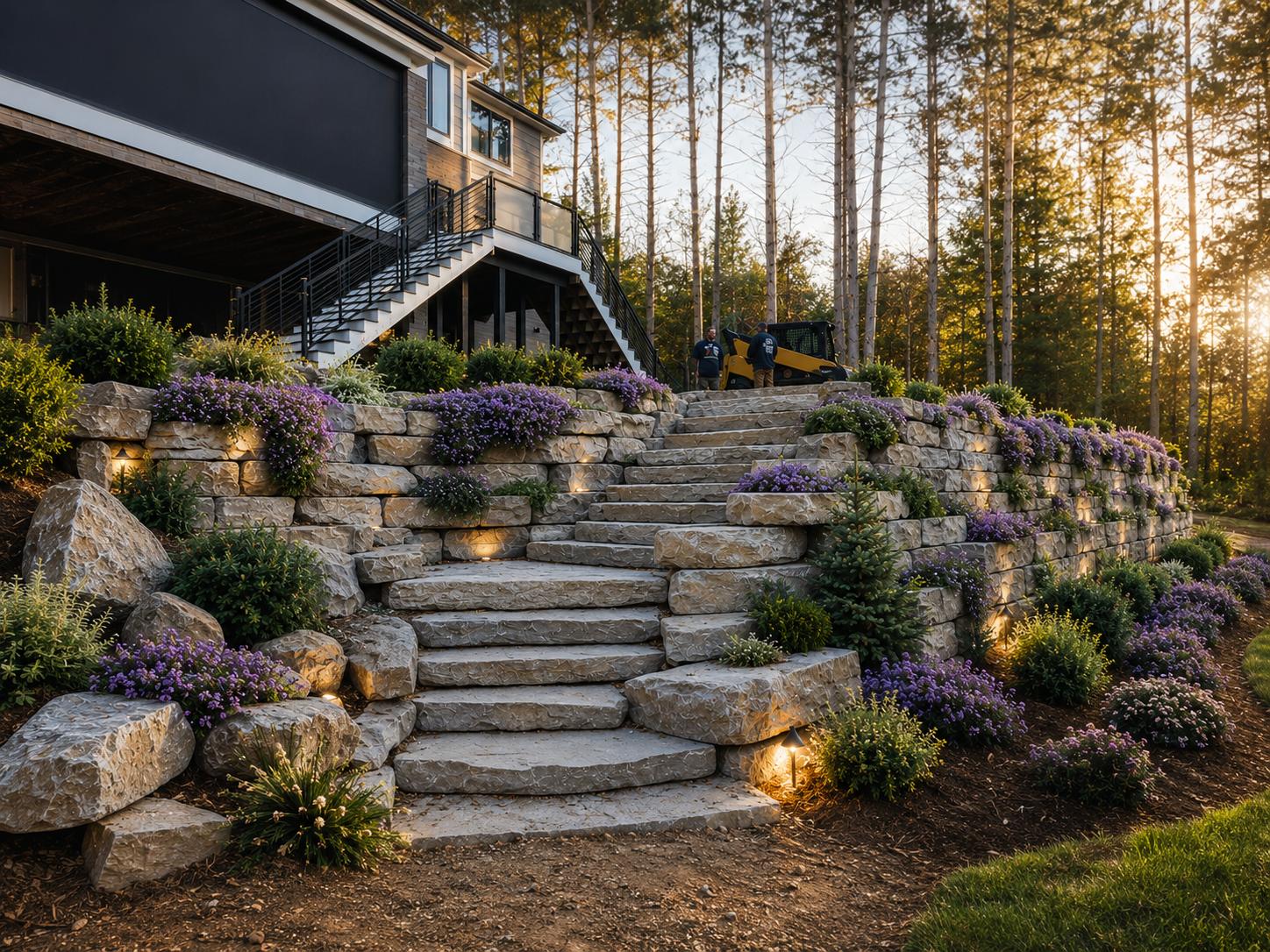
Outdoor Spaces Designed for Daily Use
Hardscape Design & Construction in Macomb for patios, walkways, retaining walls, and outdoor gathering areas that improve property function and curb appeal
Hardscape planning starts with understanding how you use outdoor space—whether you need a patio sized for furniture and grilling equipment, walkways that connect functional areas without creating mud paths, or retaining walls that terrace slopes and create usable flat zones. Scenic Stoneworks LLC provides comprehensive hardscape planning and construction services in Macomb, handling patios, walkways, retaining walls, outdoor gathering areas, and integrated features through custom project design based on property goals and layouts. Material selection, aesthetics, and functionality considerations drive decisions about pavers versus poured concrete, natural stone versus manufactured units, and permeable versus solid surfaces depending on drainage conditions and intended use.
The construction process involves site layout and excavation, subbase preparation with compacted aggregate, edge restraint installation, unit placement or concrete forming, and finishing details that tie hardscape elements to existing landscape and architecture. Seamless project management from concept through completion means design revisions happen before construction begins, not after materials are delivered.
Arrange a design consultation to discuss your outdoor space goals and review material options suited to your property.
How Hardscapes Improve Outdoor Usability and Curb Appeal
Custom hardscape design integrates elevation changes, drainage patterns, sun exposure, and access points into a plan that addresses how people move through and use outdoor areas rather than simply placing generic patio templates into yards. Material choices affect both appearance and maintenance—natural stone weathers to a patina, pavers allow easy access to underground utilities, and poured concrete delivers continuous surfaces without joint lines that collect debris.
Once construction is complete, you'll notice defined outdoor rooms that extend living space beyond the house, walkways that remain firm and level through wet seasons, and retaining walls that hold grade without the bowing or rotting common in timber systems. Properly constructed hardscapes drain water away from foundations and prevent the pooling that creates muddy zones or kills turf, and integrated features like seat walls, fire pits, or planters add function without requiring separate projects or coordination between multiple contractors.
Design flexibility allows hardscapes to match architectural styles ranging from formal symmetry to naturalistic curves, and phased construction lets property owners complete high-priority areas first while planning future additions that tie into existing work. Retaining walls over four feet tall require engineering in Michigan, and permeable pavers reduce stormwater runoff in areas with drainage restrictions or environmental goals.
Answers to Frequent Hardscape Questions
These questions help property owners understand what hardscape projects involve and how design choices affect outcomes.
What is the difference between pavers and poured concrete for patios?
Pavers offer easier repair if underground utilities need access and allow design flexibility with colors and patterns, while poured concrete creates continuous surfaces without joint lines and typically costs less per square foot for large areas.
How do you prevent retaining walls from leaning or failing?
Proper construction includes aggregate backfill for drainage, compacted base material, batter (backward lean) built into the wall face, and geogrid reinforcement for walls over three feet tall, all of which manage soil pressure and water accumulation behind the wall.
Can hardscapes be added without disrupting existing landscaping?
Careful planning protects existing plants and turf, though some disturbance occurs during excavation and material delivery, and design adjustments can route walkways or patios around mature trees or established garden beds that property owners want to preserve.
Why does subbase preparation matter for hardscape longevity?
Subbase supports the hardscape surface and prevents settling that creates uneven pavers or cracked concrete, which is especially important in Macomb where freeze-thaw cycles stress materials and amplify any movement caused by inadequate base compaction.
What maintenance do hardscapes require after installation?
Paver joints need occasional sand replenishment to prevent shifting, concrete benefits from sealing every few years to resist staining, and retaining wall drainage outlets should be checked annually to confirm water is exiting rather than building pressure behind the wall.
Scenic Stoneworks LLC develops hardscape plans that reflect your property's layout, drainage characteristics, and use priorities. Schedule a consultation to review design concepts and confirm that the proposed materials and construction approach align with your outdoor living goals and budget.