
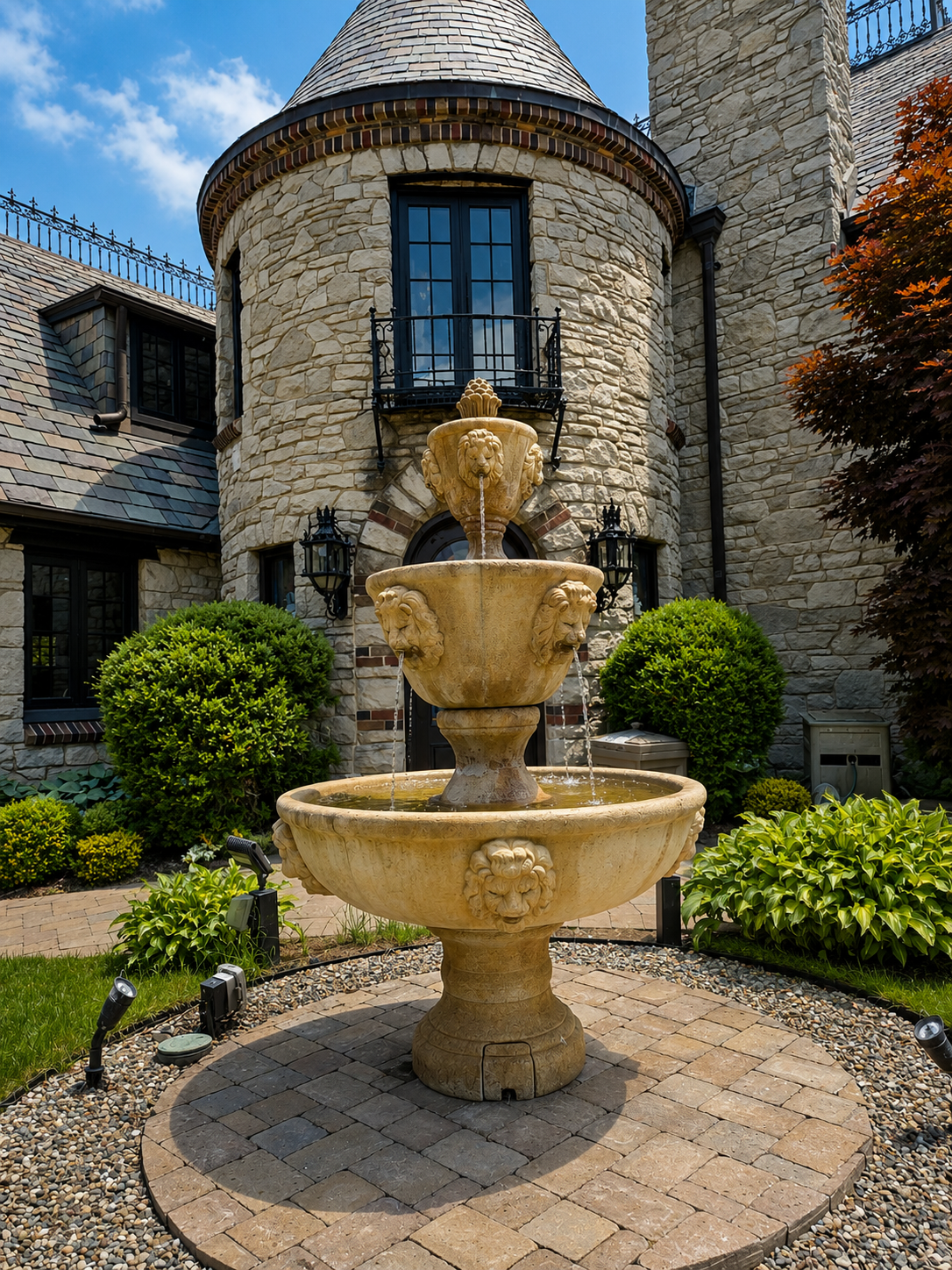
Restoring Stonework Before Damage Spreads
Stone Repair & Restoration in Macomb for aging or damaged stonework showing settling, cracking, shifting, or weather-related deterioration
Stonework deteriorates when mortar joints fail and allow water penetration, when footings settle unevenly and cause units to shift out of alignment, or when freeze-thaw cycles open cracks that widen each winter until structural integrity is compromised. Scenic Stoneworks LLC provides repair and restoration services in Macomb for patios, walls, walkways, and stone features where addressing visible damage now prevents total reconstruction later. Common issues include settling that creates uneven surfaces, cracking from thermal expansion or substrate movement, shifting caused by soil consolidation or inadequate base preparation, and weather-related deterioration that degrades mortar and exposes stone edges to further damage.
Restoration solutions begin with identifying what caused the failure—whether it's drainage problems, missing reinforcement, insufficient footings, or simply aged mortar that has weathered beyond its service life—and then addressing the underlying condition before repairing visible damage. Repairs for stonework involve removing compromised units or mortar, correcting base or substrate issues, reinstalling or resetting stone with proper bedding and joint fill, and matching materials to maintain visual consistency across repaired and original sections.
Request a repair evaluation to identify the extent of damage and review restoration options for your stone features.
What Stone Restoration Actually Accomplishes
Effective stone repair goes beyond cosmetic fixes by correcting the conditions that caused deterioration, which might involve improving drainage behind retaining walls, adding base material under settled pavers, or repointing joints with mortar formulated to match the hardness and permeability of the original installation. Matching materials means sourcing stone that approximates the color, texture, and size of existing units and blending mortar to coordinate with weathered joints so that repairs integrate visually rather than standing out as obvious patches.
After restoration, the stonework reads as cohesive rather than visibly repaired, with uniform joint lines, stable surfaces, and proper water shedding that prevents the recurring damage common when repairs address symptoms rather than causes. Patios return to level walking surfaces without the trip hazards created by settled or heaved pavers, walls regain plumb alignment and stop further shifting, and walkways shed water correctly instead of channeling it into joints where freeze-thaw damage accelerates.
Restoration extends the lifespan of existing investments by decades when done correctly, and early intervention costs substantially less than waiting until failures require full demolition and reinstallation. Not all stone damage justifies repair—sometimes deterioration is so widespread that reconstruction delivers better value—but evaluation determines where targeted restoration makes sense and where replacement is the more practical approach.
What Property Owners Usually Ask
Stone repair and restoration projects in Macomb often raise these questions during initial evaluations.
What causes stone patios or walkways to settle unevenly over time?
Settlement occurs when base material was insufficiently compacted during installation, when soil beneath the base consolidates under load, or when water infiltration washes away bedding sand and creates voids that allow pavers to drop into low spots.
Can individual stones be replaced without rebuilding the entire feature?
Isolated replacements work when the surrounding stonework remains stable and the base is sound, but widespread damage or systemic settling often means adjacent areas will fail soon after spot repairs are completed, making phased or full reconstruction more cost-effective long-term.
How do you match old stone and mortar during restoration?
Matching involves comparing samples to existing materials for color and texture, and mortar is blended to approximate the weathered appearance of original joints, though perfect matches are difficult because stone and mortar change appearance as they age and because sourcing identical materials may not be possible years after initial installation.
Why does repointing mortar joints matter for stone walls?
Mortar protects stone from water infiltration and holds units in alignment, so deteriorated joints allow moisture penetration that accelerates freeze-thaw damage in Macomb winters and permits individual stones to shift under lateral pressure or loading.
When should stone features be repaired versus fully replaced?
Repair makes sense when damage is localized and the underlying structure remains sound, but replacement becomes more practical when deterioration is widespread, when repeated repairs have already been attempted, or when original construction methods were inadequate and failures will continue regardless of surface fixes.
Scenic Stoneworks LLC evaluates stonework damage to determine whether repair or replacement offers better long-term value based on the extent of deterioration and the condition of underlying support systems. Schedule an evaluation to review your stone features and receive an estimate that addresses both immediate damage and underlying causes.